

Tadej Pogačar won his fourth Strade Bianche title on Saturday, finishing it off with a solo attack that lasted 79 kilometers. Alone, he traveled roughly the distance of two marathons on a bicycle, much of it over gravel roads. And his margin of victory? Over a minute ahead of second-place finisher Paul Seixas.
Is this just the latest data point in an ongoing analysis: whether Pogačar’s dominance is actually still changing how professional cycling works.

Another dominant win in Tuscany.
Strade Bianche (Italian for “white roads”) is an Italian Classics race that takes place in Tuscany’s countryside. As the name suggests, it features eight sectors of unpaved white-gravel roads that test riders’ bike handling, strength, and endurance all at once. The race has an iconic finish as well, at Siena’s iconic Piazza del Campo.
In the 2026 edition, Pogačar’s UAE Team Emirates squad controlled the race early. As the peloton approached Monte Sante Marie, a long gravel sector with 80 kilometers remaining, Pogačar accelerated.
Tom Pidcock, another top contender for the win, suffered a mechanical issue. His chain fell off at precisely the wrong moment, losing crucial seconds in the attack. By the time he remounted, Pogačar had opened a gap between the two that would never close.
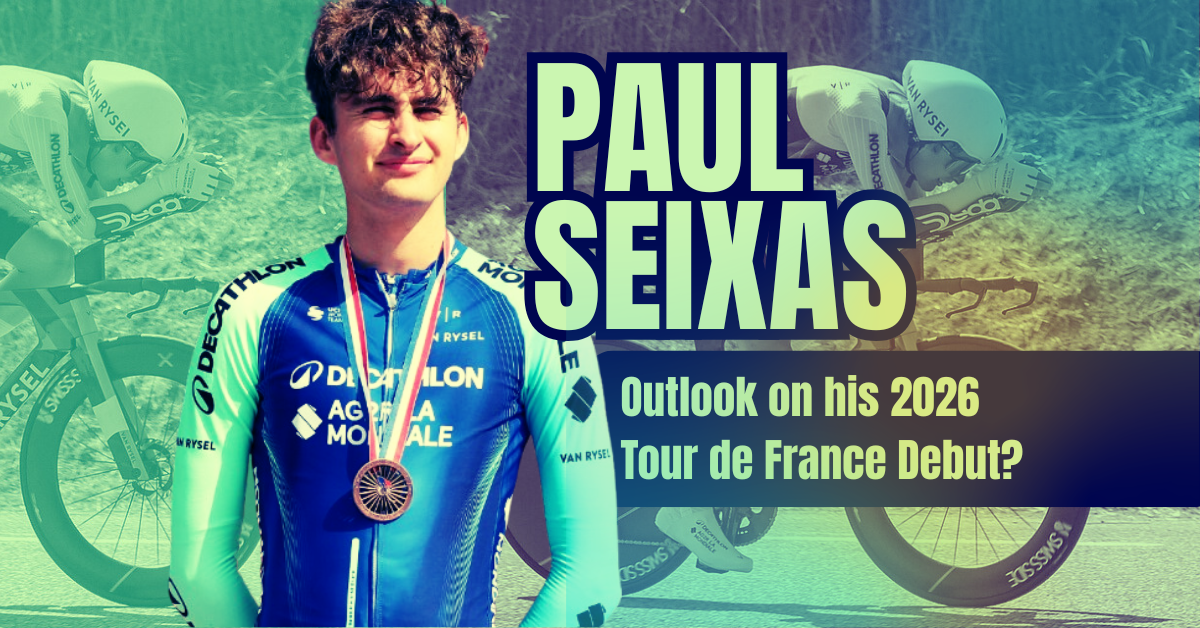
A new factor in the equation this year was Paul Seixas, a 19-year-old Frenchman making his debut at the race as well. Seixas is entirely overhyped, but he is also extremely talented as a newcomer to the top level of the sport. He attempted to bridge across working together with Pogačar’s teammate, Isaac del Toro.
And remarkably, Seixas succeeded in catching the world champion. For approximately 30 seconds, it appeared we might witness a genuine contest.
Of course, reality reasserted itself. Seixas had expended too much energy matching Pogačar’s pace. When Pogi attacked again, Seixas couldn’t respond.
With 79 kilometers still to race, Pogačar rode off alone. And he continued that way all the way to the finish line…
Embed from Getty ImagesNumbers that matter.
Let’s take a look at just how dominant Pogačar has been at Strade Bianche in particular. His four victories (2022, 2024, 2025, 2026) are an unprecedented level of control over this specific event. No other rider in the race’s modern era has won more than twice.
His strategy for winning tell an interesting story. In 2022, he claimed a solo victory after attacking with 50km remaining. Again in 2024: a solo, with an attack launched at Monte Sante Marie. In 2025, he won by 1:20 over the chase group.
These aren’t narrow tactical victories decided by a sprint finish or a small time gaps after a final attack. Pogačar removes any suspense at races like these.
He has a sustained power output that competitors cannot match.
But this dominance isn’t limit to Strade Bianche, obviously. Pogi won 25 races in 2024: this includes the Tour de France, Giro d’Italia, World Championship road race, and multiple one-day classics. In 2025, he won the Tour de France again, plus Il Lombardia, and now Strade Bianche to open 2026.
His winning percentage, the ratio of races entered to races won, exceeds 40% over the past two seasons. It is spectacular and somewhat worrying that one rider is able to win so many races across the entire cycling calendar!
What does this level of dominance really mean for competition?
When one rider consistently wins by large margins, it raises some largely uncontroversial questions.
Is Pogačar simply that much better? Are his rivals underperforming? Has team strategy evolved to amplify individual superiority?
The more controversial side: should we do something about it? Or should Pogi be able to continue his winning streak unchecked, cementing him as one of the best riders (if not the best) of all time?
Embed from Getty ImagesThere are a few factors definitely at play in the current era of Pogačar dominance:
Physiological advantage: Pogačar doubtlessly has an exceptional VO2 max (the maximum oxygen his body can utilize during exercise) and power output. On sustained climbs, Pogačar produces approximately 6.2-6.5 watts per kilogram for 30-40 minutes.
Recovery capacity: Pogačar’s ability to produce repeated high-intensity efforts suggests superior recovery between efforts. This is a less visible but still important advantage in races featuring multiple climbs or attacks, as well as stage racing.
Team infrastructure: UAE Team Emirates invests heavily in Pogi. Their superstar benefits from advanced nutrition protocols, altitude training camps, aerodynamic testing, and a roster built specifically around his victories.
Tactical adaptation: This is less talked-about. Pogačar’s competitors increasingly race defensively, waiting for him to attack rather than initiating their own moves. They race for second. A reactive approach, paradoxically, makes his dominance easier to maintain.
Wait, are the others really racing for second?
While Pogačar rode alone through Tuscany, behind him an interesting battle developed for the podium positions.
Paul Seixas, after being dropped, regrouped with Isaac del Toro and Matteo Jorgenson, in a chase group that eventually grew to about a dozen riders.
Tom Pidcock attacked and was followed by Del Toro, Jan Christen, Seixas, Jorgenson, and Wout van Aert. Yet even their combined efforts as top riders in the sport couldn’t sustain pressure on Pogačar. By the time he hit the gravel sector at Montechiaro with 25 kilometers remaining, his lead was growing again. He maintained a full power output despite having already raced 55 kilometers solo.
On the final gravel climb up Le Tolfe, Seixas attacked with Del Toro following. These two riders separated from the chase group and remained the second group on the road into Siena. Del Toro had the luxury of sitting on Seixas’s wheel, but seemingly couldn’t outsprint him on the final uphill kick of Via Santa Caterina.
Seixas’s second-place finish is a significant achievement for a 19-year-old debut. His willingness to chase Pogačar (even though it ultimately failed) demonstrated a more aggressive racing mentality that occasionally produces upsets.
There’s only one question.
How often do riders actually make a move to beat Pogi?
The strategic implication of racing for second.
How do you race against someone this dominant? Teams and riders always face difficult tactical decisions, but this is on another level.
That’s because a traditional approach of marking the favorite closely and responding to attacks… it doesn’t work. Pogačar attacks early and sustains power over distances that drain all of his rivals when they’re attempting to follow.
What else can they do? Multiple teams coordinating attacks might force Pogačar’s team to chase repeatedly, potentially fatiguing him before the decisive moment. Attacking at unexpected moments or locations where Pogačar’s team can’t control the race is another option.
But in the performance-driven era of “marginal gains,” many teams aren’t willing to embrace these approaches. They sometimes target specific races where Pogačar might be less motivated or less prepared… but that’s it. Any other successful approach will require cooperation among rivals who ultimately might just have to compete against each other for second place.
This coordination problem, which touches on some elements of game theory, makes upsetting a very dominant champion even more difficult.
A young rider like Seixas might be willing to try something crazy. But too many riders are happy to sit back and accept that they’re never going to be as good as Pogi, and their team strategies don’t allow them to do what they need to do to possibly beat him.
Embed from Getty ImagesIs “witnessing greatness” all the time bad for cycling as a sport?
This question about “witnessing greatness” is a meme, but the reality behind it divides cycling fans and analysts, usually (and sadly) among fandom lines.
Some argue that Pogačar’s superiority removes competitive tension, making races predictable. Others (those who like Pogi) counter that witnessing generational talent is what justifies the sport’s existence.
Eddy Merckx won approximately 34% of races he entered during the 1970s. But his dominance attracted audiences precisely because fans wanted to witness his exceptional performance. The same occurred with Miguel Indurain and his five consecutive Tour de France victories, as well as Lance Armstrong. Although his Tour victories were later removed due to his doping violations, he still commanded interest especially from American audiences at the time.
Is there something that differentiates Pogačar’s era? If there is, it’s his margin of victory and the variety of race types he conquers.
Merckx won across disciplines, but typically in closer finishes. Indurain dominated stage races but then he rarely won classics.
Pogačar wins both, often by substantial margins.
From a competitive-health perspective, yes, this creates some challenges. Younger riders developing their careers face a demoralizing reality. Even perfect execution might not be enough to beat Pogačar, especially when your other rivals refuse to play along to bring him down. Higher up, sponsors investing in the sport might struggle to justify budgets when the top of the podium seems almost predetermined.
Yet, the sport continues attracting viewers. Television ratings for races featuring Pogačar remain strong. Audiences still value watching an exceptional performance even when the outcome is no surprise at all.
Embed from Getty ImagesLooking ahead to the 2026 season.
Pogačar’s Strade Bianche victory is a sign of continuity. Nothing is changing. Pogi’s stated objectives for 2026 include defending his Tour de France title, winning additional Monuments (these are the sport’s five most prestigious one-day races), and potentially targeting the road World Championship again, to be held in North America for the first time since 2013.
Can anyone challenge Pogi this year? Several riders might possess the level of talent needed:
- Mathieu van der Poel, a former Worlds road race champion excelling in one-day races
- Jonas Vingegaard, a two-time Tour de France winner who has beaten Pogačar in stage races
- Remco Evenepoel, the World time trial champion with his own explosive climbing ability
Yet each faces their own limitations, too. Vingegaard matches Pogačar only in three-week stage races under specific conditions. Evenepoel excels in shorter stage races but struggles matching Pogačar’s sustained efforts. Van der Poel is a Classics rider, and he peaks for specific targets rather than maintaining year-round form. And any others in the picture for an upset, like Tom Pidcock, show too much inconsistency… a mix of victories and disappointments across their individual calendars.

A broader question remains: is this sustainable for Pogi himself?
Pogačar is 26, but he’s been in his prime for a while. Professional cyclists typically peak between ages 27-30, so he might maintain his level for several more seasons. Barring injury or unexpected decline, his dominance could define the sport through the rest of the decade.
In other words, we had better just all get used to it!
What does this era of dominance mean for cycling’s future?
Listen, the “witnessing greatness” era of Pogačar’s success creates both opportunity and challenges.
I don’t want to hear about how it’s all good or all bad (and it’s usually just based on whether you consider yourself a Pogi fan or not).
On one hand, he actually transcends what would seem to be possible, which is fascinating. His talent in undeniable, and he attracts media attention and new fans curious about witnessing his historic achievements. Many fans love him.
But on the other hand, the predictable nature of any race where he lines up… it risks alienating anyone who wants or needs the uncertainty and competition, from die-hard fans to rivals and even the sponsors who support them.
The sport’s governing bodies, like the UCI, as well as rival teams must navigate the current state of cycling carefully. Should race formats really change to limit team control and this level of dominance? Should equipment regulations evolve to reduce tech advantages? And what about salary caps to prevent one team from recruiting too much talent?
These questions have no easy answers.
What’s certain? We are witnessing greatness: a rider who will define how future generations understand cycling. One day, he’ll be like Eddy Merckx. Whether it enhances or diminishes the sport’s appeal depends partly on how the race organizers, teams, and other riders adapt to his supremacy. And it partly depends on whether anyone will emerge in the coming years capable of genuinely unseating him from his winning streak.
For now, the pattern will continue. Pogačar attacks, rivals chase, and the world champion crosses the line alone.
It’s familiar, and even predictable. But it’s also remarkable. It only really matters when you consider the rarity of these athletes who transcend such a level of dominance that we can really call them “boring.”
The question isn’t whether Pogačar will keep winning, or even whether it’s “boring.” The question is whether the rest of the pro cycling world will actually step up and do anything about it.
Embed from Getty ImagesDo you enjoy watching predictable Pogi wins? Why or why not? Let us know your feelings on the state of modern cycling in the comments or on social media! ★






Leave a Reply