

In the world of professional cycling, everything else can feel secondary to the Tour de France, the biggest moment of the sport! But is that right? Or is it time for Italy and Spain to have their time to shine?
Let’s look at how the three Grand Tours are ranked as far as prestige, and whether they should be balanced in the esteem of cycling fans more fairly in the future.
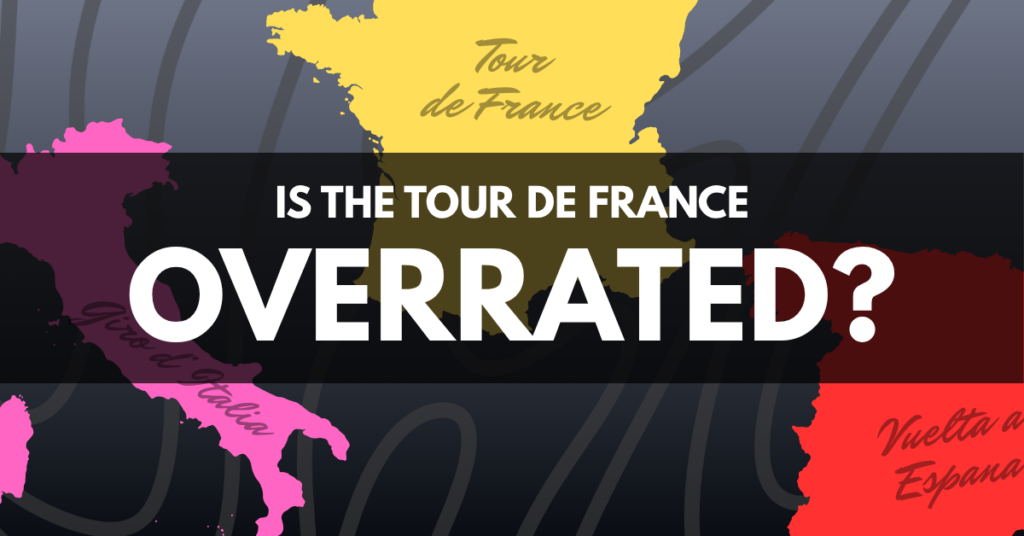
The race that ate the sport…
Every July, the cycling world stops completely, and all eyes are on the Tour de France.
Cameras flood the French roads, broadcasters around the world set up big blocks of airtime, and casual fans who haven’t thought about a bike since last summer suddenly have strong opinions on stage profiles.
Well, the Tour de France is, without question, the most recognizable bike race on the planet! It pulls in over 3 billion viewers each year and commands sponsorship deals that dwarf every other race on the calendar.
But for real cycling fans, here’s a question worth asking: has the Tour’s dominance actually distorted how we understand cycling at the top level?
What France has… and what it doesn’t.
Truthfully, the Tour de France earns its prestige. It’s almost always amazing!
You’ve got the Alps, the Pyrenees, individual time trials, bunch sprints… it tests nearly every discipline a rider can possess every day over the course of three weeks. It’s absolutely true that winning its GC contest requires tactical brilliance and the highest level of physical strength.
Teams build their entire season around a top-ten performance at the Tour de France, and this is seen as totally normal.
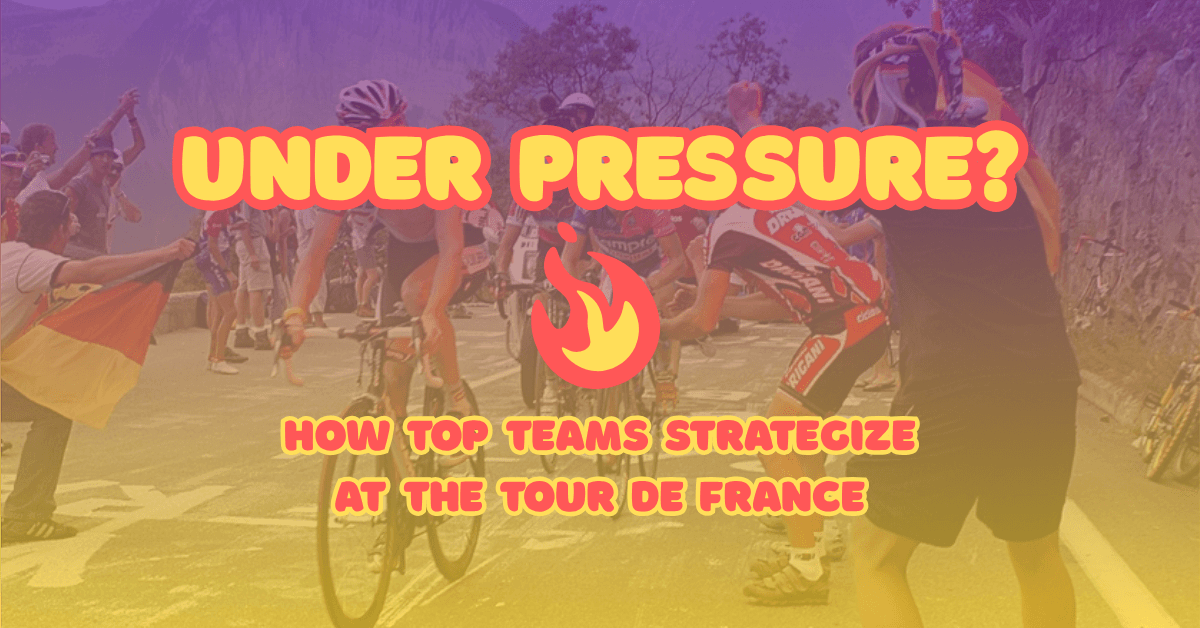
The Giro d’Italia has been more exciting and underappreciated in recent years.
What doesn’t the Tour de France have? Simply put: Italy and Spain!
The Giro d’Italia is held each May, and sometimes is considered to be a more technically demanding race than the Tour de France.
The climbs are steeper, the roads are narrower, the weather is more unpredictable, and the organizers have a reputation for designing a tough and exciting race year after year. Consider the Stelvio or the Mortirolo, some of the most difficult and iconic climbs in the Tour de France. Away from the commercial glare of July, some truly spectacular racing takes place.
Do the statistics back this up? Surprisingly, yes! The average gradients on key Giro climbs regularly exceed 10-12%, compared to the Tour’s more variable but often less intense ascents. Winner’s margins at the Giro are frequently tighter as well.
Beyond this, the Giro has heart. The fans and organizers are passionate, and the best riders show up to race. Almost every year without fail, we see a spectacular show on the roads of Italy.
Yet the Giro attracts roughly a third of the Tour’s global media coverage. Why is this?
At the end of the day, that gap is due to sponsorship and promotion, not necessarily quality.
Embed from Getty ImagesThe case of the race of the falling leaves.
You might think at first that France simply has more cycling history and heritage than Italy, and that explains the discrepancy. Here, you might also be surprised!
Outside of France’s Paris-Roubaix, Italy also boasts two wonderful Monuments (Milano Sanremo and Il Lombardia) along with an almost-Monument in Strade Bianche. A Monument is the highest classification a one-day race can receive, and since there are only five in the entire season, it’s emblematic of how important cycling is to Italy. Il Lombardia is among them.
In the case of the “race of the falling leaves,” Il Lombardia features repeated short, brutal climbs through the stunning northern Italian scenery… quite possibly the best Monument. The Madonna del Ghisallo is a climb so historically significant it houses an actual cycling chapel and museum! And it attracts the top talent. Tadej Pogačar has won it five consecutive times (2021, 2022, 2023, 2024, and 2025)… its status as a race for the sport’s absolute elite seems set in stone at this point.
Yes, it’s true that one-day races like this reward a completely different skill set than Grand Tours. But they help build the case that Italian cycling is just as important as French cycling, including on a prestige level.
Embed from Getty ImagesThe beauty of the Vuelta a España.
If the Giro is undersold, the Vuelta a España is almost invisible to casual audiences! This is despite being the third Grand Tour of the cycling season and, in recent years, arguably the most exciting of the three.
Spain’s race has historically attracted riders who skipped or burned out at the Tour, which gave it a reputation as a secondary event. That perception is now becoming seriously outdated, as the Vuelta’s modern route design is genuinely aggressive. It features shorter stages, more summit finishes, and less time trialing, which means the race stays pretty explosive into the final week.
The Tour is known to produce careful, chess-match racing between leaders. On the other hand, the Vuelta regularly delivers chaotic, unpredictable stages that might be tactically richer viewing.
What about attracting top talent? Noted Vuelta merchant Primož Roglič has won it four times. Another top star, Remco Evenepoel, claimed the red jersey in 2022. And some of the sport’s most capable Grand Tour riders, especially Spanish riders, target a victory on the roads of Spain.
Because the Vuelta sits in late summer, when much of the European media has moved on from cycling, it lacks the cultural mythology the Tour has built around French national identity and landscape. It’s a marketing problem, but not unsolvable.
For cycling fans, there’s no excuse. If you lined up the three Grand Tours, watched all three, and judged them purely on race quality and drama, the Vuelta would likely top the list more often than its awareness to the casual fan suggests!
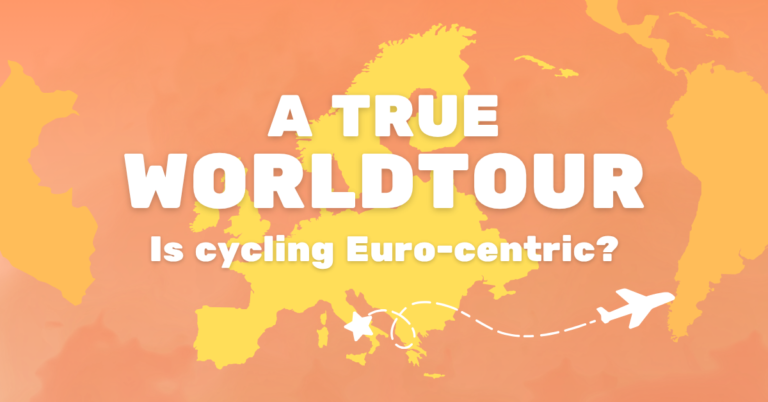
Can we rebalance the conversation?
None of this is meant to diminish the Tour. It’s extraordinary in its own right!
But if you’re building an understanding of professional cycling and which races matter most, then treating the Tour as the only race that matters leaves an enormous gap. In Italy and Spain, we see some of the sport’s most compelling narratives… and races often decided by smaller margins and in harsher conditions.
If the Tour de France is cycling’s biggest stage, can Italy and Spain be its soul? To the knowledgeable cycling fan, they might just be!
Embed from Getty ImagesWhich Grand Tour do you love watching the most? Let us know in the comments or on social media! ★




Leave a Reply