

Finding the right bike helmet when you have a rounder head can be frustrating. Here’s how to choose a well-fitting helmet if your noggin is on the rounder side!
(Note: This article includes affiliate links. This means CyclingScoop may receive a commission from Amazon on purchases you make from links on this page, at no extra cost to you. These links are indicated by a ☆ symbol. Please see our affiliate disclaimer for more information.)
Why is shopping for a round helmet so challenging?
Most helmets are designed for so-called “Intermediate Oval” head shapes. That means these helmets are slightly longer from front to back.
This causes problems for head shapes at both ends of the spectrum: either longer than usual, or rounder than usual.
If you have a round head, standard helmets can create painful pressure at your temples while leaving gaps at your forehead and back.

Read More:
Do you have an oval-shaped head? Find out how to choose the right helmet here.
Does a poor fit really affect the safety of the helmet?
You might think at first: I’ll just tolerate the discomfort. But a poor bike helmet fit can reduce the safety benefit of wearing a helmet at all! A bad fit, as studied in kids, increases the risk of head injury by nearly two times.
That’s because a loose or improperly adjusted helmet can slip during a crash, leaving the head vulnerable. A poorly positioned helmet may also fail to protect the forehead or skull depending on where the helmet is “gapping” or having fit issues.
Shopping for a round head requires a different approach that just walking into your LBS and picking out the first helmet you see! That’s okay, because finding a good fit is important. Here’s how to find a helmet that’s safe, comfortable, and actually fits!

Image from Pexels.
First, identify your head shape.
If you’re having fit issues, you might not be clear on whether your head is more oval or rounder than helmet manufacturers “expect.” That’s because the fit issues for either way can look very similar to the average helmet shopper.
So before you shop, actually confirm your head geometry! Have someone look down at the top of your head, or use a flexible measuring tape.
An intermediate oval will be slightly longer front-to-back than side-to-side. This is the industry standard for most bike helmets.
If you see that your head has this general shape but you’re still experiencing fit issues, you might actually have a long oval head shape.
For the round oval, the length and width of your head will appear nearly equal. If this is you, this guide will help.
Can I tell my head shape from the fitting issue I’m having?
The fit issues for helmets can be hard to diagnose, since it can honestly be difficult to feel where pinching or gapping are really happening on your head.
However, if most helmets feel tight on the sides of your head even when the size matches your circumference, you likely have a round head shape.
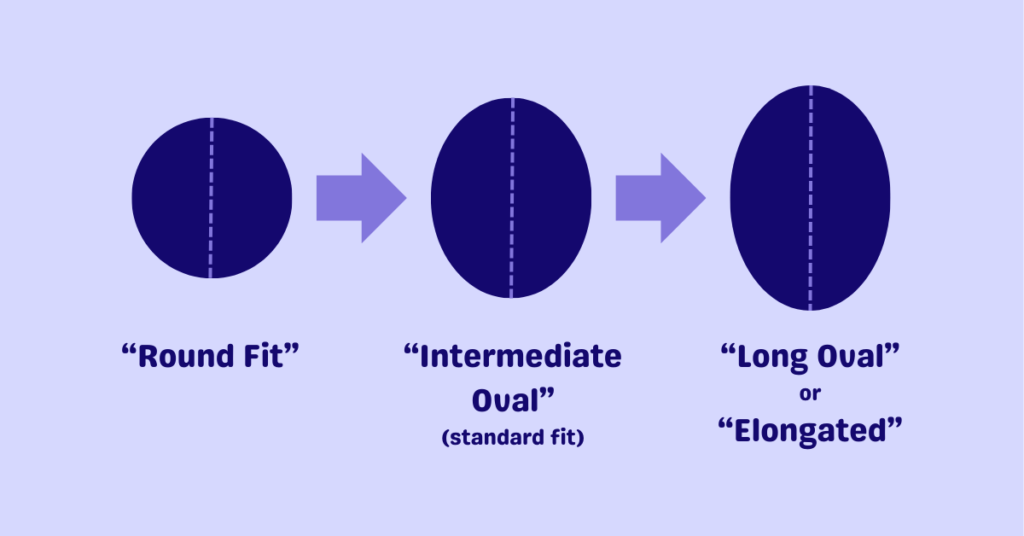
Helmets that target an Asian fit or are specifically for round heads might be a good choice.
While the cycling industry makes most helmets for the average rounded oval head, they still recognized that head shapes vary.
Because of this, many major brands such as Giro, Smith, or Specialized offer “round fit” helmets, including versions of their main-line helmets, to meet this need. These helmets are specifically built with a wider internal diameter at the temples, and will have a flatter curve at the back for more spherical heads.
You might also see some of these helmets referred to as “Asian fit.” That’s because cyclists from East Asian countries have slightly rounder heads on average. Helmets made by Asian companies also tend to be rounder, reflecting this difference. If you are interested in exploring, two popular Japanese brands for bike helmets are Shoei and Arai, although they may not supply their helmets to all countries.
Here are some popular round fit helmet options:
Trek Starvos WaveCel (Round Fit)
This is a versatile helmet with WaveCel technology that has been designed for riders that need a rounder helmet shape. Per Trek, “WaveCel is a collapsible cellular structure that lines the inside of the helmet.”
Buy this helmet directly from Trek
Giro Agilis MIPS
Giro helmets are preferred by folks with round heads, as they have a rounder shape than most consumer helmets. The Agilis is a popular choice for amateurs or beginners, but you can also visit their website for higher-end options.
Buy this helmet from REI or Amazon ☆
Giant Rev Comp Helmet
Giant branded helmets are developed in Taiwan and tend to have a rounder shape. Like Giro, you can explore their options and try on different options for the best fit, but the Rev Comp is a popular choice at a reasonable price point.
Buy this helmet from Giant
If you can, try on the helmet before you buy.
If you measure your head circumference in centimeters, place the flexible measuring tape about an inch above your eyebrows. Circumference gets you into the right size bracket (small, medium, large, etc), but the internal shape is what will actually matter for fit.
For this reason, see if you can try on the helmets before you buy. Alternatively, you can order several options and return any that don’t fit well. If you’re shopping online, check the return policy. Fit is subjective, and what works for one round head might not work for another.
When trying on a helmet:
First, put the helmet on without buckling. If you feel some immediate pressure at your temples, it’s too narrow for the rounded shape of your head.
Next, try to tighten the dial at the back. After this, you should try to rock the helmet back and forth and side to side. If it slides side to side easily but feels tight front to back, it’s an oval mold. This is a good sign to keep looking elsewhere as you don’t want your helmet to move like that in the event of a crash!
Finally, you should look for any gaps between the foam and your forehead. A proper fit should have uniform contact around your entire head.

Remember, don’t skimp on the safety features either!
It’s important to find a good fit, but don’t sacrifice safety features. IF you can, make sure any helmet you choose has MIPS (multi-directional impact protection system) or a similar rotational-impact technology, like Trek’s WaveCel mentioned above.
These systems use a low-friction layer inside the helmet that allow for slight movement to happen during a crash. This will reduce the rotational force to your brain. Most modern helmets now include these features.

Image from Unsplash.
Are you ready to find your perfect fit?
Finding the right helmet is largely about comfort, for customers with a round head, this can be a challenge. However, it’s all about making sure the helmet stays in the correct position during an impact. This maximizes your safety.
It’s possible to find a helmet that’s both comfortable and safe for your rounded noggin. By targeting brands that offer rounder molds or even dedicated round fits, you’ll spend less time with a headache and more time riding!
Are you hoping to find your perfect helmet fit? Let us know your search strategy and which helmet you choose in the comments or on social media! ★









Leave a Reply